







News & Insights
Executing Excellence: Learning the Craft, Three Associates on Their First Years at Cinven
11 November 2026
Every dealmaker starts somewhere. Behind the Partners and Senior Principals who lead transactions are the Associates learning the craft in real time, on live deals, from day one.
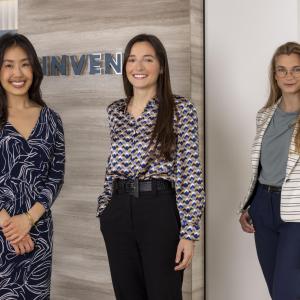
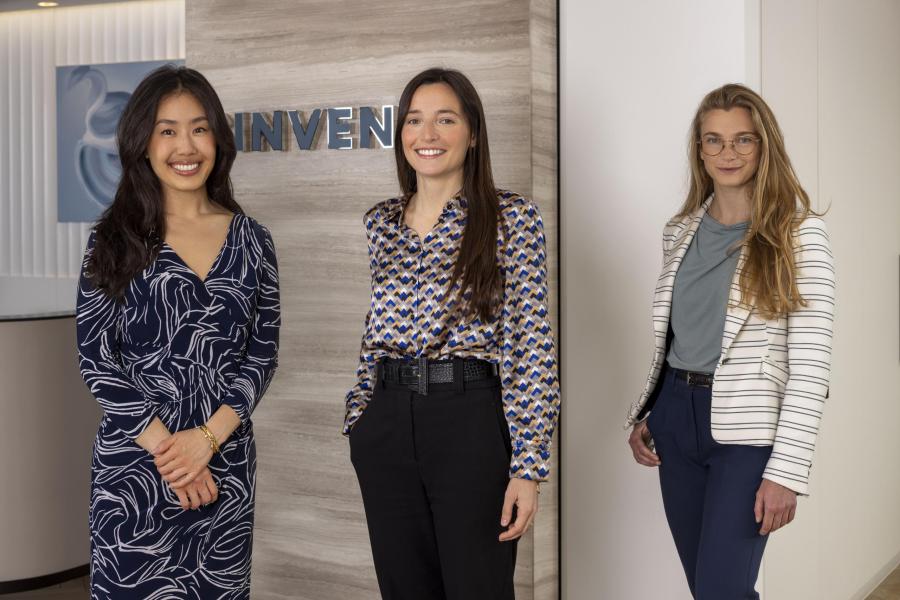
Lucy Chen, Sofia Vaz de Moura and Carlotta Broglia joined Cinven’s Associate programme between 2023 and 2024, arriving from investment banking, restructuring and private credit. Originally based across New York, Madrid and London, and covering different sectors, they share what drew them to Cinven, what the early months actually looked like, and what they’d tell someone considering the same path.
Finding the right fit
Each came to private equity from a different starting point but landed on the same conclusion.
Lucy Chen spent her early career at Evercore, advising companies and creditors through restructuring processes. The move into private equity was a natural extension: “I wanted exposure investing behind good businesses and working with management to accelerate their growth, which is Cinven’s core philosophy.” What sealed the decision was culture as much as strategy: “Cinven felt like the obvious choice, it had the scale and infrastructure of a large platform, yet the New York team still felt tight-knit and entrepreneurial.”
For Sofia Vaz de Moura, the decision was personal as well as professional. After two years at JPMorgan working alongside private equity clients, she was looking to relocate to Madrid: “Given Cinven’s long-standing presence and track record in Iberia, it was an obvious choice, and my interest was further reinforced by the connection I felt with the team during my interviews.”
Carlotta Broglia’s path ran through credit, first at Goldman Sachs, then at KKR’s EMEA Private Credit and Strategic Investments team. The shift to equity was deliberate: “I wanted to be involved in strategic decision making at portfolio companies and be able to work side by side with the management teams of our investments.” Cinven stood out for its “European roots and collaborative culture.”
The first few months
All three describe onboarding less as a fixed programme and more as a genuine investment in how they’d grow.
Chen’s introduction combined structure and immersion: “a week of formal training, a few weeks in London meeting the broader team, and a dedicated mentor,” backed up by a team that was “very willing to grab coffee, teach, and share examples of prior work to help me ramp quickly.”
Vaz de Moura points to how deliberately her team shaped her early exposure: “My team took an active interest in what I wanted exposure to from the start and asked where I’d like to build experience rather than simply staffing me.” That interest wasn’t a one-off, it continued through regular check-ins on how she was finding the job.
Broglia experienced a similar balance of autonomy and support: “My team gave me autonomy where I felt comfortable with it, whilst encouraging me to ask questions and remaining available to provide advice or address any doubt.”
All three also point to the same structural feature behind that support: Cinven’s country/sector matrix. As Vaz de Moura puts it, “you’re constantly working across teams rather than in a single silo, so you end up drawing on expertise and building relationships across the firm on most deals rather than just your immediate team.”
What dealmaking actually feels like
Ask each of them what they enjoy most, and the answers land at different points in the process, a reflection of how varied the work is even at Associate level.
For Chen, it’s the sprint of a live deal in second round: “momentum has built internally, and we are sprinting across multiple diligence areas simultaneously… this combination of stress and excitement makes this stage quite fun and rewarding.”
For Vaz de Moura, it’s earlier and more human, meeting the people behind the business: “meeting founders and management teams is one of my favourite parts, hearing how they founded and grew their businesses and how they overcame challenges.”
For Broglia, it’s later still, once a deal has closed: “I really enjoy the post-close phase when we’re working with management to execute the value creation plan, moving from strategy into actual operational improvements… there’s something satisfying about seeing the initial thesis translate into concrete decisions and measurable outcomes.”
Building judgment early
Beyond technical skills, all three describe judgment as the thing that actually differentiates people over time.
Chen is direct about it: “At the junior level, it’s important to not only be a safe pair of hands and execute well, but what really differentiates people over time is judgment. Try to form your own view on every investment opportunity: Would I actually back this business?” She recommends doing so by “pressure-testing the thesis, looking at past deals that have been brought to IC, and identifying patterns.”
Broglia frames the same idea more informally: “Be curious about companies and how their business models work. Build the habit of forming a view on whether they’d make good investments or not (even if it’s your local pub!).”
Vaz de Moura’s advice emphasises pacing over volume: “Treat it as a marathon rather than a sprint. Invest early in the technical toolkit, because that foundation is what gives you confidence in the room later.”
Advice for women starting out
Asked what they’d tell other women considering the path, the three converge on relationships and self-advocacy.
Chen: “Be intentional about the relationships you build and find people who will invest in your growth. The best mentorships I’ve seen are ones that develop naturally when someone enjoys working with you and continues pulling you into opportunities.”
Vaz de Moura: “Be explicit about what is important to you, inside and outside your working schedule. People generally want to help but they can’t guess what you need and look for sponsors as well as mentors.”
Broglia: “Networking events (like those organised by Level20) are a great way to learn about different funds and ask questions that will prepare you for interview processes. They are also great to meet like-minded people and start building a network.”
When it comes to mentorship specifically, each has found it differently, Chen through “strong female role models across different levels of the organisation,” Vaz de Moura through a senior connection that “developed naturally” rather than through a formal programme, and Broglia through her immediate team, who taught her that “maintaining positivity and perspective in challenging situations can go a long way towards building resilience.”
—
Discover more about how collaboration is at the heart of how we work: see our Culture and Values.
Lucy joined Cinven as an Associate in September 2023, having previously worked at Evercore in their Restructuring group. She is based in New York.
Sofia joined Cinven in 2023 and became an Associate in 2025 after completing the Analyst programme. She is now an Associate in the New York office, having transferred from Madrid in March 2026.
Carlotta joined Cinven as an Associate in April 2024, having previously worked at Goldman Sachs and KKR’s EMEA Private Credit and Strategic Investments team.